Games & experiments

Building games. Learning how to build.

Building a game is a demanding way to learn AI-assisted coding. Rules have to hold, the world has to remember what happened, and another player will quickly find what I missed. I take those lessons back into the software I build for legal work.

These are also worlds I enjoy making and sharing with my children. They test them, suggest changes and increasingly make things of their own. Games Inc Jr grew through working alongside my son; TinyWriters began with him, independently.

The larger worlds

The Steads.

Four browser games: the North York Moors, the open sea, Mars and Viking-age Northumbria. The collection lives at steadgames.com. These are evolving projects; Havenstead’s War mode is a playable prototype, with Campaign still in development.

Explore all four at steadgames.com ↗

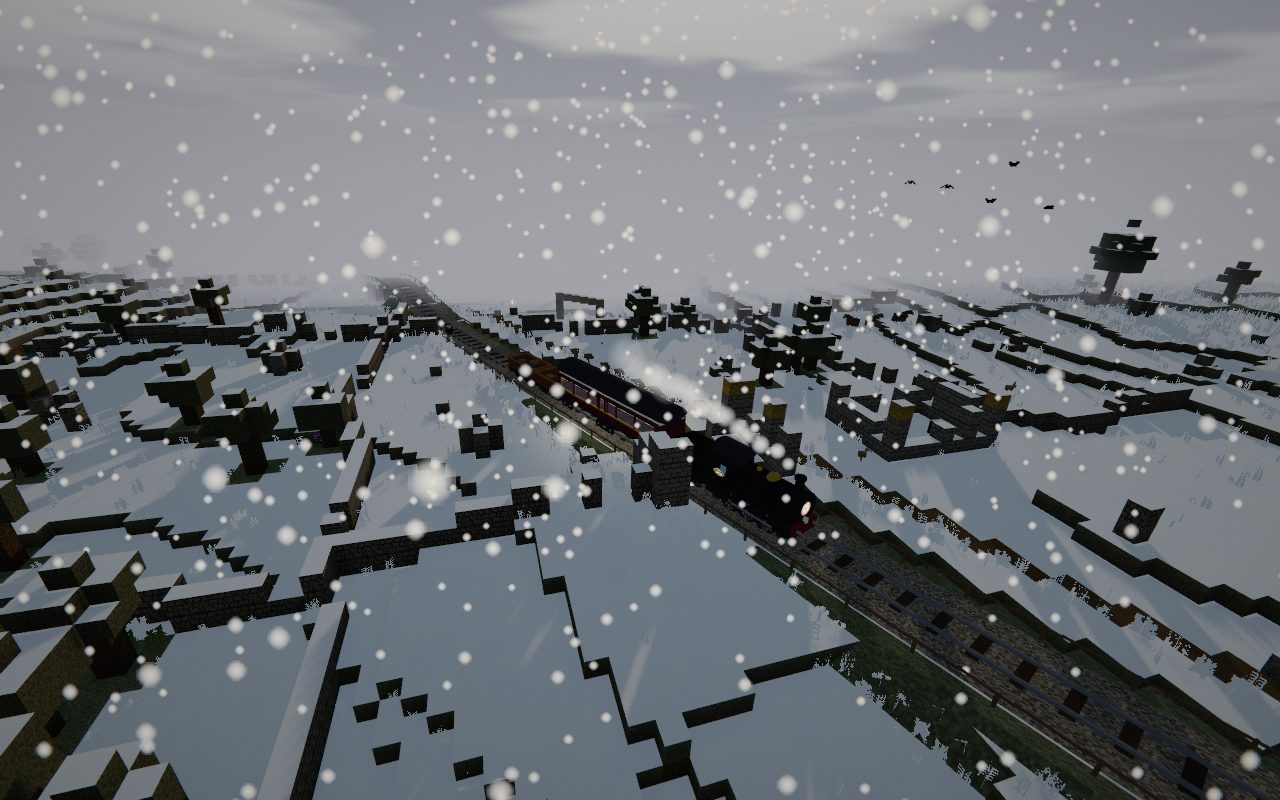
A steam train crossing a snow-covered village in Moorstead
In-game capture · Moorstead

Building, farming & village life

Moorstead

A sandbox set on the North York Moors. Build and farm, explore villages and quarries, ride the steam railway towards Whitby and talk to AI villagers. It brings together a shared world, persistent changes and characters whose conversations need to make sense within that world.

Visit Moorstead ↗
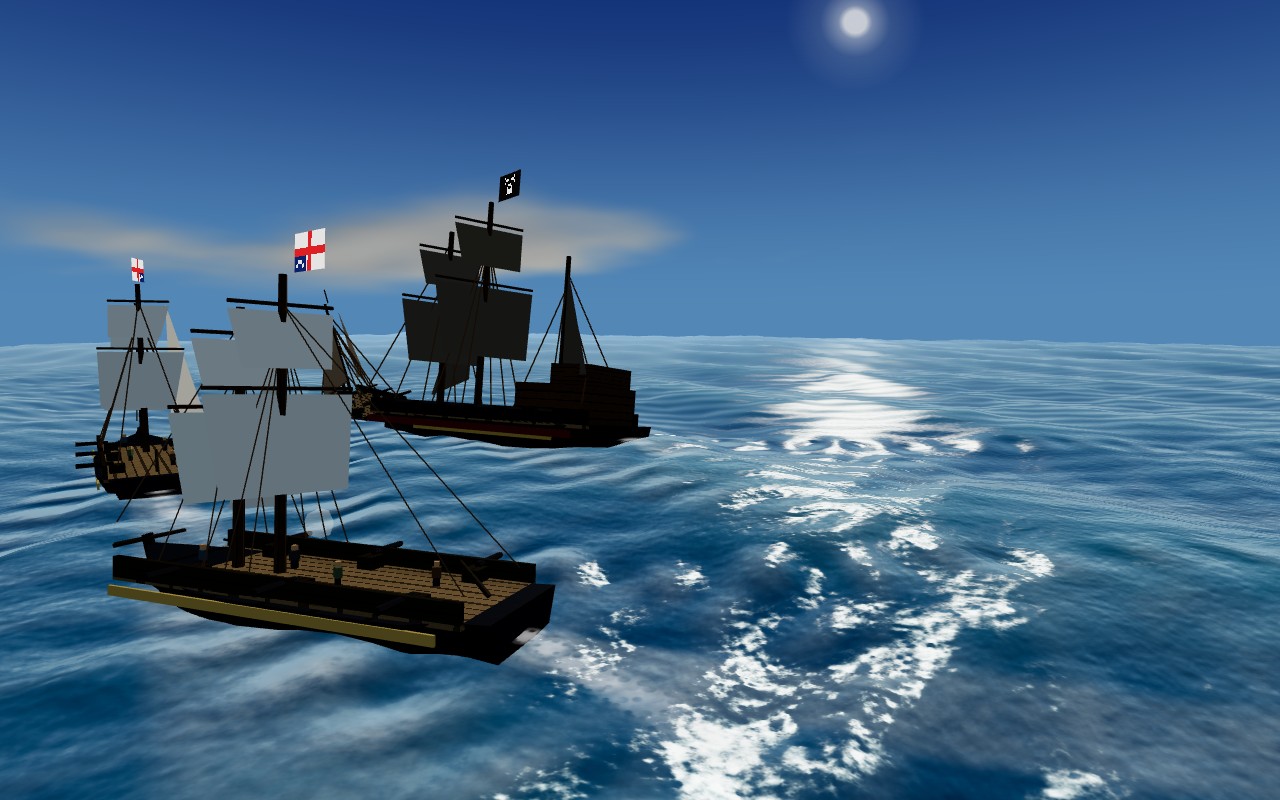
Tall ships sailing across the sunlit sea in Saltstead
In-game capture · Saltstead

Sailing, navigation & decisions at sea

Saltstead

A sailing game on a scaled version of Earth. Handle the sails, navigate between ports, recruit a crew and work up from a sloop to larger ships. Wind, depth, repairs and the cost of losing a ship make the route and timing matter as much as the destination.

Visit Saltstead ↗
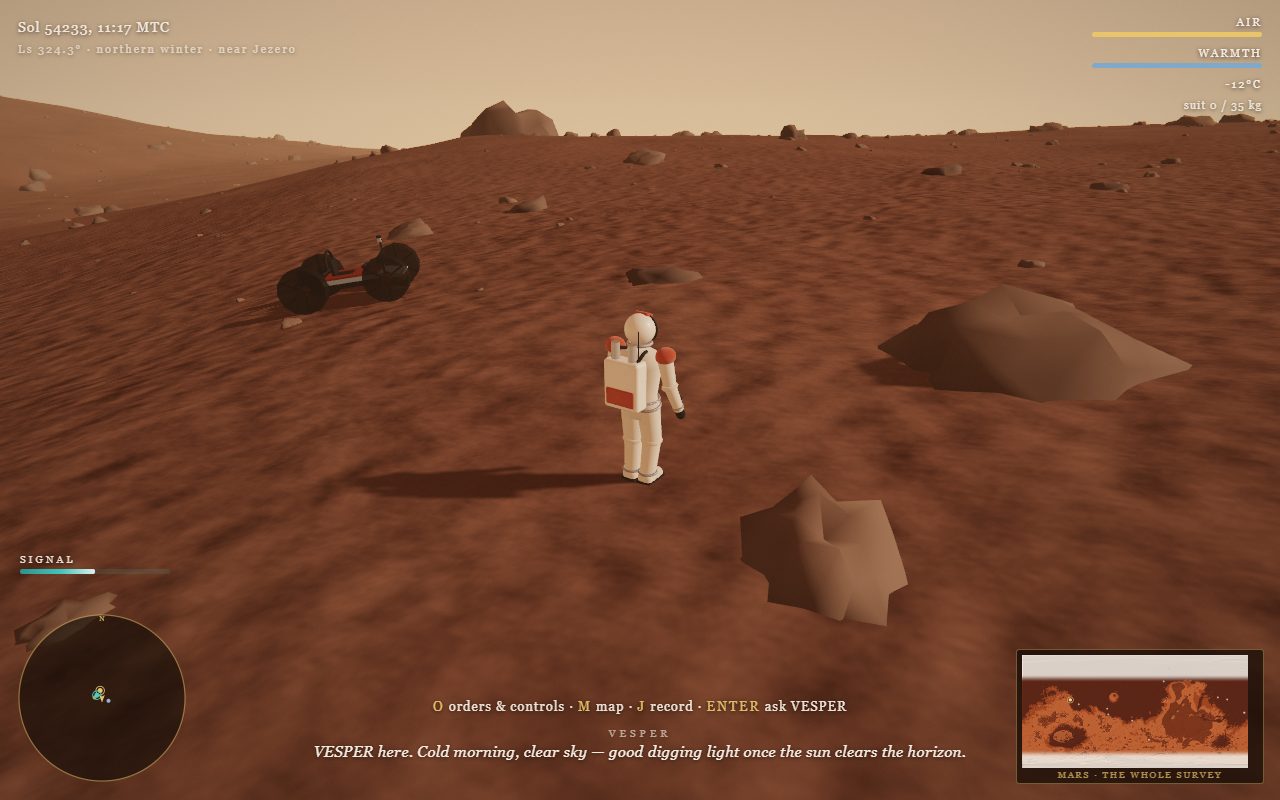
A settler and rover on the red terrain of Marsstead
In-game capture · Marsstead

Survival & exploration

Marsstead

A survival and homesteading game built around Mars terrain data. Manage air and heat, build a base and explore by rover, with VESPER as an AI companion. This is also a test of how an AI character can respond to the player’s actual surroundings and situation.

Visit Marsstead ↗
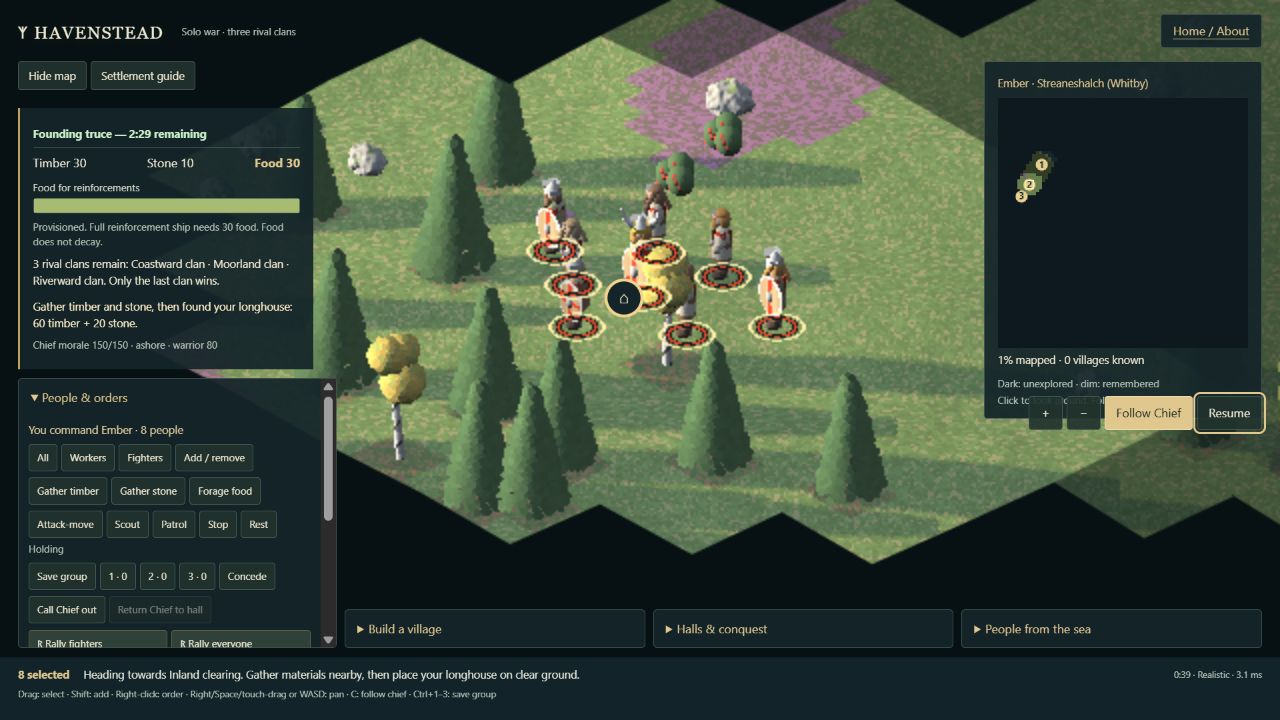
A Viking band exploring wooded ground in Havenstead’s playable War mode
Live War prototype · captured October 2026

Viking strategy · playable prototype

Havenstead

Command a Viking band on a map around Whitby: gather supplies, establish a settlement and contest rival halls. War can be played solo against computer clans or with other players. It is a useful test of interacting rules: resources, orders, recruitment, territory and loyalty. The larger Campaign is still in development; skirmishes have no saved progress.

Visit Havenstead ↗
Saltstead in motion · seven seconds of captured gameplay, September 2026. A brig sails near the coast while the wind, speed and point of sail change. Silent clip.

Building together

Games Inc Jr.

I developed Games Inc Jr alongside my son, who is nine. It became a place for us to experiment with making games and interactive characters, and to explore how a child can use AI to develop an idea of their own.

Build your own game

The game-making flow takes a child from an idea to an AI-generated draft they can play and revise. They describe what they want, choose rules, controls and obstacles, try the result and explain what should change. It makes the decisions involved in creating a game visible: what the player does, what makes it difficult and whether the result behaves as intended.

Fantasy animals to talk to

Magic AI Friends explores a different kind of interaction: chatting with imaginary animals and characters. Children can create a character’s name, appearance and personality, then talk to it. That gives them another way to develop an idea through language and see how the character responds.

The project matters to me as an experience of building alongside my son. It gives us something concrete to discuss and change together, with room for his ideas to shape what we make.
His own initiative

TinyWriters.

TinyWriters is a writing-practice tool my son built himself. He started it independently, without any prompting from me, developed it in Claude Code and then showed me what he had made. My part was to polish it and deploy it.

That is a particularly meaningful example of what I hope this work can encourage: a child deciding what to make, taking the initiative and bringing an idea to life. The idea and the code were his.

Open TinyWriters ↗

Still on the workbench

Local prototypes.

These experiments are part of the development story. I have not linked them as public games because a current public release has not been confirmed.

  • Culture Clash / Physarum

    An experimental game about competing slime-mould cultures. Food, growth, flow and decay produce changing networks. It explores behaviour emerging from local rules; it is a game approximation, not a calibrated biological simulation.

    Simulation · local prototype
  • Androsstead

    An early exploration prototype using elevation data from Andros, Greece. The current slice covers terrain, daylight and movement on foot. The archaeological game remains a direction for further development.

    Exploration · foundation prototype

Why I build them

A place to test the whole system.

I have written on LinkedIn about why game development has become part of my technical education. A convincing screen is only the beginning. The rules, stored state, interfaces and AI characters all have to work together while somebody does things I did not anticipate.

Make the rules explicit.

A building needs materials. A ship needs supplies. An order changes what a unit does next. Those dependencies force me to specify what must remain true and check it in code. A feature can look finished while its rules are still wrong.

Understand the architecture.

Adding one more feature exposes the quality of the earlier decisions: where state lives, which component owns a change, and how systems communicate. I use these projects to get better at directing coding agents, reading their work and recognising when a plausible fix is hiding a deeper problem.

Test what people actually do.

Other players find paths I did not plan. AI characters need the right context about their world. A successful build or a passing unit test cannot tell me whether the experience makes sense. I have to play, observe, trace failures and revise.

That practice carries back into legal technology: defining the task precisely, keeping track of state and evidence, checking the boundaries between components, and testing the result rather than trusting the appearance of completion. Games give me room to experiment and make mistakes without putting a client’s matter at risk. They do not certify a legal tool; they make me a better informed builder and reviewer of one.

With my children, the purpose is also creative independence: deciding what to make, explaining why it should work, trying it and changing it. I want them to develop understanding and judgment alongside the ability to produce software.

The thinking, shared as I built

The story of Moorstead: game creation and AI-assisted software architecture ↗Moorstead 1900: a litigator building a virtual world ↗